

SANITARY
AND PHYTOSANITARY MEASURES 14–15 MARCH 2001
SPS body looks at current epidemics, ‘equivalence’ and standard-setting
Various
countries’ responses to the BSE (mad cow disease)
crisis, the latest situation on foot and mouth disease in
Europe and Argentina, and various bilateral concerns were
discussed in the 14–15 March 2001 meeting of the WTO
Committee on Sanitary
and Phytosanitary Measures (SPS).
The meeting also discussed “equivalence”, a
subject which also comes under
“implementation”
in the General Council, and developing countries’
participation in international organizations that set
standards for food safety and animal and plant health and
safety.
Among the issues generating lengthier discussion were:
SEE
ALSO:
press
releases
WTO
news
Mike
Moore's speeches
Renato
Ruggiero's speeches, 1995-99
> report
of previous meeting
The
WTO is not responsible for the content of external
internet sites linked from this page
BSE (mad cow disease)
The discussion came under several agenda items. Frequently raised was the question of obligations under the SPS Agreement — whether particular situations would require a country restricting imports to inform WTO members before adopting emergency measures. Brazil said it would prepare a paper on this for the General Council discussions on “implementation” (i.e. how the present WTO agreements should be implemented, particularly for developing countries).
1. Canada explained its recent actions on BSE, in particular the temporary ban on products from Brazil, which has now been lifted. Canada stressed that this was purely a health issue and that it was acting while waiting for information to determine whether the Brazilian products pose a BSE risk. Brazil complained that Canada had acted without warning.
2. The European Union provided information on its latest actions. Without naming any countries, the EU said that some trading partners had taken actions that were unnecessarily harsh, including banning products that are considered by the International Organization of Epizootics (OIE, or World Organization for Animal Health) not to be risky.
3. The OIE and World Health Organization presented their latest papers on BSE (G/SPS/GEN/230 and G/SPS/GEN/221) (see box)and the WHO’s paper on variant CJD (G/SPS/GEN/222), the human disease linked to BSE.
How to search for and download official documents
To search for documents referred to here, go to the WTO on-line document database.
Insert the codes indicated in the “document symbol” window of the search engine.
4. Romania, representing Bulgaria, Croatia, Czech Republic, Estonia, Hungary, Latvia, Poland, Romania, Slovak Republic, and Slovenia, complained about import bans in Australia, Argentina, Canada, Rep of Korea, New Zealand, and the US. The complaining countries said the bans were unjustified because BSE had been found in the EU, but not in these other European countries. The countries introducing the bans said they had to take action while seeking more information because the recent discoveries in the EU had been result of stricter surveillance. They said they wanted to be sure that BSE not existed without detection.
back to top
Foot and mouth disease
The EU reported on the latest situation, including the outbreak discovered in France a few days earlier. The infected French herd was 500 metres from a herd of sheep that had been imported from an infected farm in the UK, the EU said.While describing its “regional” approach to containing the disease, the EU complained that some countries’ actions had been excessive because imports had been banned from the whole of the EU. Some members responded that their measures were temporary and aimed at providing them with enough time to assess the situation adequately.
back to top
Other specific measures discussed
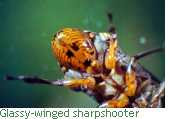 One
issue generated comment from several members — a US
complaint about the length of time Australia has taken to
complete an analysis of risks and allow imports of
Californian table grapes. Malaysia, Indonesia,
Philippines, Thailand and the EU agreed that Australia
takes too long. Australia denied that it is taking longer
than most other countries and argued that countries
should separate the length of time taken under rules
preceding the SPS Agreement from those that Australia has
applied since 1995. It also rejected the US argument that
there is no risk from “glassy-winged
sharpshooters”.
One
issue generated comment from several members — a US
complaint about the length of time Australia has taken to
complete an analysis of risks and allow imports of
Californian table grapes. Malaysia, Indonesia,
Philippines, Thailand and the EU agreed that Australia
takes too long. Australia denied that it is taking longer
than most other countries and argued that countries
should separate the length of time taken under rules
preceding the SPS Agreement from those that Australia has
applied since 1995. It also rejected the US argument that
there is no risk from “glassy-winged
sharpshooters”.The committee discussed a record of 16 other bilateral trace concerns, including:
- Argentina on Venezuela’s requirements for garlic and potatoes;
- Argentina and Bolivia on EU maximum levels of aflatoxin (see EU notifications G/SPS/N/EEC/51 and G/SPS/N/EEC/95);
- Canada on Hungary’s pork restrictions;
- Chile on Bolivia’s poultry measures;
- Thailand, Malaysia, Indonesia and the Philippines on new EU maximum levels of lead, cadmium, mercury and 3-MCPD in soy sauce and other foodstuffs (see EU notification G/SPS/N/EEC/100);
- Canada on India’s bovine semen restrictions;
- New Zealand on Indonesia’s fresh fruit restrictions (see New Zealand’s concerns expressed in G/SPS/GEN/219);
- Thailand on Mexico’s rice import restrictions (an old issue first raised in October 1997);
- ASEAN on Australia’s restrictions on prawns (see Australia’s notifications G/SPS/N/AUS/124 and 126);
- the US on EU measures on gelatin;
- Ecuador on Turkey’s restrictions on bananas.
back to top
Equivalence (also an “implementation” issue in the General Council)
This is the question of countries recognizing that different methods could be equivalent in providing the same level of health protection against risks of disease or contamination.In his report to the General Council on discussions this time, the chairperson said the committee agreed that equivalence does not necessarily require formal equivalence agreements but can be achieved at different levels. It stressed the importance of information, and members said they would inform each other through the WTO when they recognize that other members’ measures have equivalent results.
Background explanation: SPS measures reduce risks to consumers, livestock or plants to acceptable levels. Measures to achieve an acceptable level of risk can often be different. Among the alternatives — and on the assumption that they are technically and economically feasible and provide the same level of food safety or animal and plant health — governments should select those measures that are not more trade restrictive than required to meet their health objective. Furthermore, if another country can show that the measures it applies provide the same level of health protection, these should be accepted as equivalent. This helps ensure that protection is maintained while providing the greatest quantity and variety of safe foodstuffs for consumers, the best availability of safe inputs for producers, and healthy economic competition.
Developing countries in particular say developed countries are not doing enough to accept that actions they are taking on exported products provide levels of protection that are equivalent to the developed countries’ requirements. This complaint has been raised as one of the many issues in the WTO General Council under the heading of “implementation”.
The chairman’s report was submitted to the General Council meeting on implementation on 16 March.
back to top
Participation in international standard-setting bodies
This is an “implementation” issue that has also been discussed in the General Council. Director-General Mike Moore has been actively involved and has reported regularly to the General Council (the latest is in document WT/GC/45 of 6 March 2001).The “three sisters” (Codex Alimentarius, Office International des Epizooties or World Organization for Animal Health, and the International Plant Protection Convention) briefed members on participation in international standard-setting bodies in a workshop before the SPS Committee met. The information showed that developing countries are participating more, but not necessarily in the most adequate manner. One problem, the committee heard, is that the work of these organizations is not always relevant to developing countries. Egypt said that both sides need to act: developing countries need to do more homework; and developed countries and international organizations should listen more to the developing countries. Malaysia proposed that more standard-setting meetings should be held in developing countries.
(See summary documents from Codex — G/SPS/GEN/236; IPPC — G/SPS/GEN/227; World Health Organization — G/SPS/GEN/231)
_______________
This was the first meeting of 2001. Chairing it was S.I.M. Nayyar of Pakistan. At the end, the committee elected William Ehlers of Uruguay as his successor. The next meeting will be in July 2001.
Yes, says the World Organization for Animal Health or Office International des Epizooties (OIE) in an SPS Committee paper (G/SPS/GEN/230 ). The OIE says it considers the following products to be safe from BSE even if they come from areas where BSE exists:
“In the light of the available scientific knowledge, the OIE recommends that, whatever the health status of an exporting country with regard to BSE, importing countries should not apply any restrictions on importation or transit through their territory:
- of milk and milk products;
- of semen;
- of protein-free tallow and derivative products;
- of dicalcium phosphate (with no trace of protein or fat);
- of hides and skins;
- of gelatine and collagen prepared from hides and skins.”