

OMC: COMMUNIQUÉ DE PRESSE 2005
PRESS/427
12 décembre 2005
ASSISTANCE TECHNIQUE
L'aide en faveur des capacités commerciales des pays pauvres a augmenté de 50 pour cent depuis Doha
Le volume de l'assistance technique et du renforcement des capacités liés au commerce — qui vise à aider les pays en développement et les pays les moins avancés à participer plus efficacement au commerce international — a augmenté de 50 pour cent depuis la Déclaration ministérielle de Doha en novembre 2001, selon un rapport conjoint de l'OMC et de l'OCDE.
>
Pour en savoir plus sur l'assistance technique
VOIR AUSSI:
> Communiqués de presse
> Nouvelles
> Allocutions:
Pascal Lamy
Le montant de l'assistance technique et du renforcement des capacités liés au commerce (AT/RCLC)
— visant à aider les pays en développement et les pays les moins avancés à participer plus efficacement au commerce international
— a augmenté de 50 pour cent depuis la Déclaration ministérielle de Doha, en novembre 2001. Selon un rapport conjoint de l'Organisation mondiale du commerce (OMC) et de l'Organisation de coopération et de développement économiques (OCDE), les donateurs étant de plus en plus actifs dans ce domaine, l'aide en faveur des capacités commerciales est passée à quelque 4,4 pour cent du montant total des engagements en matière d'aide pris par les principaux bailleurs de fonds du monde.
Le rapport tire ces informations d'une base de données commune OMC/OCDE sur le renforcement des capacités dans le domaine du commerce, qui peut être consultée à l'adresse suivante
http://gtad.wto.org/index.aspx?lg=fr. Mise en place en novembre 2002, cette base de données, qui porte aujourd'hui sur près de 15 000 activités menées entre 2001 et 2006, récapitule les engagements en matière d'aide liée au commerce dans le domaine du renforcement des capacités et de l'assistance technique pris par plus de 40 donateurs bilatéraux et agences multilatérales.
L'assistance fournie peut être classée dans trois catégories:
-
les politiques et réglementations commerciales — pour aider les pays à entreprendre des réformes et à se préparer à une intégration plus poussée dans le système commercial multilatéral — l'aide relevant de cette catégorie est passée de 0,65 milliard de dollars EU en 2001-2002 à 0,85 milliard en 2003-2004;
-
le développement des échanges commerciaux — pour aider les entreprises à mener des activités commerciales et favoriser l'instauration d'un climat propice à ces activités — l'aide relevant de cette catégorie est passée de 1,3 milliard de dollars EU à 2,1 milliards en moyenne pendant la même période;
-
les infrastructures — pour aider les pays à se doter des infrastructures physiques nécessaires à la production, au transport et à l'exportation des marchandises — l'aide relevant de cette catégorie s'est élevée à quelque 9,3 milliards de dollars EU en 2003.
Le rapport fait état des résultats d'une enquête qui montre que les donateurs ont fortement développé leurs activités dans ce domaine ces dernières années, ainsi qu'en témoignent l'accroissement des ressources financières, l'élaboration de stratégies et de lignes de programmation précises visant à développer les échanges, la plus grande prise de conscience du rôle de l'assistance liée au commerce dans la réduction de la pauvreté, et le renforcement du dialogue entre spécialistes du développement et spécialistes du commerce.
LA BASE DE DONNÉES SUR LE RENFORCEMENT DES CAPACITÉS DANS LE DOMAINE DU COMMERCE
http://tcbdb.wto.orgPOINTS ESSENTIELS
Rapport conjoint OMC/OCDE de 2005 sur l'assistance technique et le renforcement des capacités liés au commerce (AT/RCLC)
La Base de données OMC/OCDE sur le renforcement des capacités dans le domaine du commerce (BDRCC) porte sur près de 15 000 activités fournies entre 2001 et 2006 par plus de 40 donateurs bilatéraux et agences multilatérales. Le rapport donne une vue d'ensemble des engagements pris en faveur de l'assistance technique et du renforcement des capacités liés au commerce (AT/RCLC) entre 2001 et 2004, sur la base des données transmises à la BDRCC.
L'assistance liée au commerce est classée dans trois catégories:
-
les politiques et réglementations commerciales — pour aider les pays à entreprendre des réformes et à se préparer à une intégration plus poussée dans le système commercial multilatéral;
-
le développement des échanges commerciaux — pour favoriser l'instauration d'un climat propice aux activités commerciales; et
-
les infrastructures — pour aider les pays à se doter des infrastructures physiques nécessaires au transport des marchandises et à l'exportation.
Graphique 1 — Répartition de l'AT/RCLC et des aides à l'infrastructure
par région et principale catégorie — millions de dollars EU
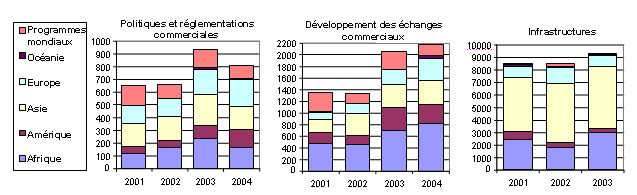 |
Depuis la Déclaration ministérielle de Doha, l'ensemble des activités d'assistance destinées au renforcement des capacités commerciales a augmenté de 50 pour cent.
- Les engagements concernant l'aide apportée aux pays bénéficiaires dans le domaine des politiques et réglementations commerciales sont passés d'un montant de 0,65 milliard de dollars EU en 2001-2002 à une moyenne de 0,85 milliard de dollars EU en 2003-2004, tandis que pendant la même période, les engagements concernant le développement des échanges commerciaux sont passés du niveau de 1,3 milliard à une moyenne de 2,1 milliards de dollars EU.
- Les pays les moins avancés (PMA) ont absorbé 16 pour cent du total des engagements dans le domaine des politiques et réglementations commerciales et 20 pour cent du soutien apporté au développement des échanges commerciaux , chiffres bien inférieurs aux 25 pour cent enregistrés en 2003 dans les deux catégories.(1)
- Les contributions aux fonds d'affectation spéciale pour l'AT/RCLC (Programme intégré conjoint d'assistance technique, Cadre intégré, CCI et OMC, par exemple) sont montées de 26 millions de dollars EU en 2001 à 45 millions de dollars EU en 2003, puis se sont stabilisées à ce niveau en 2004.
- Le soutien à l'infrastructure économique — transport, énergie et télécommunications — qui est essentielle au commerce international, a atteint 9,3 milliards de dollars EU en 2003; l'Afrique a bénéficié d'une aide plus importante.
- En 2003, les parts correspondant à l'AT/RCLC et aux infrastructures dans le total des engagements en faveur de l'aide ont été de 4,4 pour cent et 25 pour cent, respectivement.(2)
Compte tenu des engagements pris par le G-8 et les CE ainsi qu'au Sommet mondial de 2005 des Nations Unies, le montant total de l'aide publique au développement devrait, suivant les projections du Secrétariat du CAD, passer de 80 milliards de dollars EU en 2004 à 130 milliards en 2010. Étant donné l'attention accrue accordée au commerce et aux infrastructures en vue de la réalisation des objectifs du Millénaire pour le développement, le volume de l'assistance destinée à aider les pays en développement à participer davantage, et plus efficacement, au commerce international pourrait fortement augmenter au cours des prochaines années.
Le rapport fait part des résultats d'une enquête de l'OCDE sur l'AT/RCLC, qui montrent que les donateurs ont fortement développé leurs activités dans ce domaine ces dernières années. Témoin l'accroissement des ressources financières; l'augmentation du nombre de donateurs ayant des stratégies et des lignes de programmation précises dans le domaine de l'AT/RCLC; la plus grande prise de conscience de l'importance de l'AT/RCLC pour le développement et la réduction de la pauvreté, ainsi que le renforcement du dialogue entre spécialistes du développement et spécialistes du commerce. En outre, plusieurs donateurs ont réexaminé leurs programmes bilatéraux et/ou leur participation aux programmes multilatéraux de façon à évaluer l'efficacité de leurs activités d'AT/TRCLC. Le rapport comporte aussi un résumé succinct — intitulé “Bref aperçu du renforcement des capacités dans le domaine du commerce” — qui présente pour chaque donateur un aperçu du volume de l'assistance fournie, de la stratégie suivie, des objectifs fixés, ainsi que des zones géographiques et des domaines visés.
Le rapport de 2005 accorde aussi une large place à deux événements marquants du Programme de Doha pour le développement, à savoir le lancement des négociations sur la facilitation des échanges à l'OMC et la mise en œuvre des aspects relatifs au développement de l'Initiative sur le coton, et retrace l'évolution récente de l'assistance dans ces deux domaines.
|
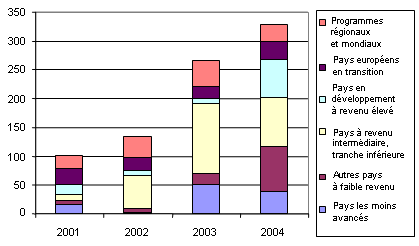
Facilitation des échanges L'assistance à la facilitation des échanges a fortement et régulièrement augmenté ces dernières années. Le total des engagements dans cette catégorie a plus que triplé entre 2001 et 2004, pour atteindre 330 millions de dollars EU. L'assistance à la facilitation des échanges passe principalement par les agences multilatérales, y compris les CE. Les pays à revenu intermédiaire, tranche inférieure — principalement des Balkans et d'Afrique du Nord — ont été les principaux bénéficiaires de ce type d'aide de 2001 à 2004, bien que la part et le volume de l'assistance en faveur des pays à faible revenu (PMA et autres pays à faible revenu) aient augmenté depuis 2003.
|
|
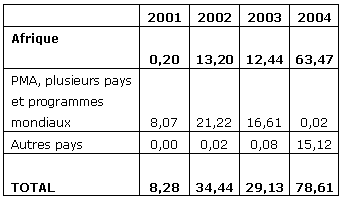
Initiative sur le coton Le tableau ci-dessous indique les montants engagés en faveur d'activités d'AT/RCLC considérées comme spécifiquement liées au coton, au niveau régional, qui ont été destinés aux quatre auteurs de l'Initiative sur le coton ( Bénin , Burkina Faso , Mali et Tchad) ainsi qu'à d'autres pays africains entre 2001 et 2004. Le montant total de l'AT/RCLC lié au coton engagé pour l'Afrique a atteint 63,4 millions de dollars EU en 2004 conformément au mandat convenu dans l'Ensemble de résultats de juillet, soit cinq fois plus qu'en 2002-2003. Au niveau mondial, l'AT/RCLC s'est monté à 78,6 millions de dollars EU, ce qui représente une augmentation de 150 pour cent par rapport à 2002-2003.
|
Notes:
1. Cette baisse est largement due au cycle de programmation des principaux donateurs qui ont pris un grand nombre de nouveaux engagements pluriannuels en faveur des PMA en 2003. retour au texte
2. Estimations de l'OCDE, calculées à partir de l'aide publique au développement (APD) ventilée par secteur. Les données pour 2004 ne sont pas encore disponibles. retour au texte