Least-developed countries (LDCs)
High-level talks in Doha spotlight trade and investment opportunities for LDCs
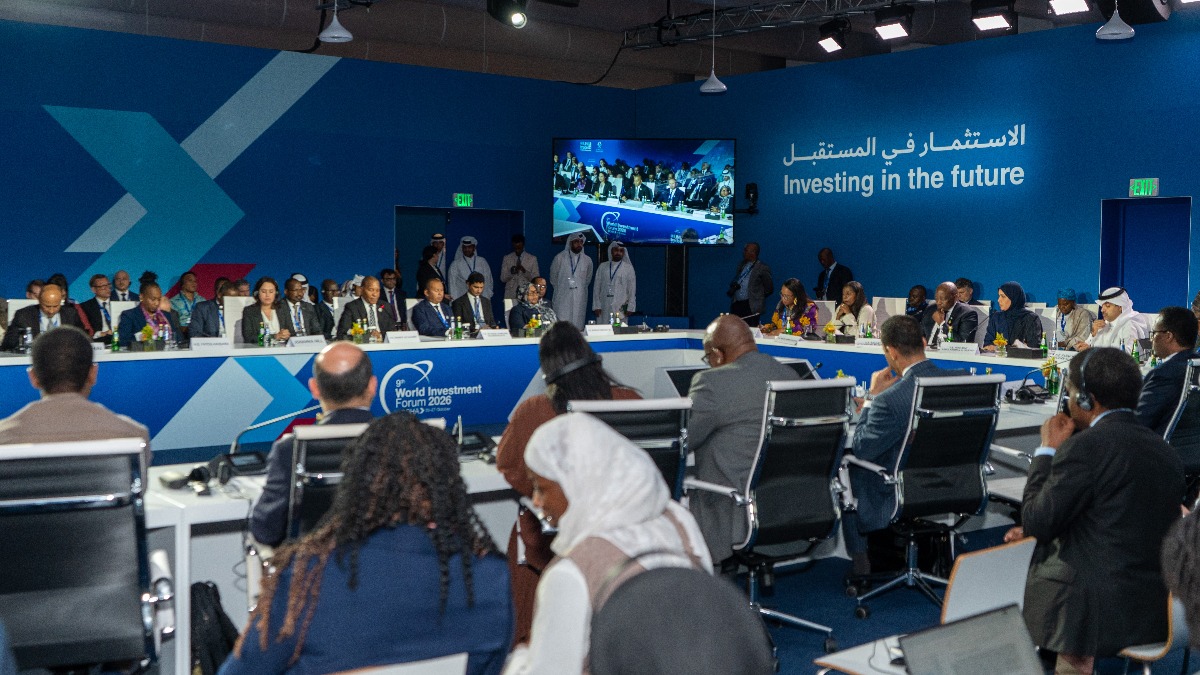
Held as part of the 2026 World Investment Forum, the roundtable, entitled "Partnerships, Investment and Trade: Advancing Sustainable Development and Prosperity in LDCs", was co-organized by the Qatar Fund for Development (QFFD) and the Enhanced Integrated Framework (EIF), in collaboration with the United Nations Office of the High Representative for the Least Developed Countries, Landlocked Developing Countries and Small Island Developing States (UN-OHRLLS), with support from UN Trade and Development (UNCTAD).
DDG Hill highlighted the WTO's role in helping LDCs translate trade rules into concrete results, including through the EIF. She called for predictable, results-oriented partnerships supported by investment and stronger productive capacities to help connect LDC businesses to regional and global markets.
"Trade agreements matter when they change lives. The EIF helps least-developed countries turn what is agreed in Geneva into jobs and opportunity on the ground, and Doha is the right place to show those results in March," DDG Hill said.
Discussions focused on the role of trade and investment in strengthening economic resilience, creating jobs and supporting sustainable graduation from LDC status. Participants highlighted the importance of affordable financing that responds to LDCs' needs without increasing debt vulnerabilities, alongside predictable, multi-year commitments to support long-term development objectives.
Participants also emphasized the need for partnerships that promote skills development, technology transfer and value addition within LDC economies. They stressed the importance of aligning these efforts with national priorities, ensuring the inclusion of women and young people in growth opportunities, and strengthening transparency and accountability in reporting results.
The roundtable featured a keynote address by the Prime Minister of Lesotho, Samuel Ntsokoane Matekane, and contributions from Fahad Hamad Al Sulaiti, the Director-General of QFFD; Kadra Ahmed Hassan, Ambassador and Permanent Representative of Djibouti to the WTO and Chair of the EIF Executive Board; Muhammadou M.O. Kah, Permanent Representative of The Gambia to Geneva and WTO LDC Coordinator and Aissatou Diallo, EIF Executive Director. The discussions were moderated by Hend bint Abdulrahman Al Muftah, Permanent Representative of Qatar to the United Nations in Geneva.
In addition, ministers from LDCs contributed to the discussions including Gamal Mohamed Hassan, Minister of Commerce and Industry of Somalia; Abdoulaye Seydou, Minister of Trade and Industry of Niger; Shariff Ali Shariff, Minister of Investment of Zanzibar, United Republic of Tanzania; Ny Riana Nampoina Raharimanjato, Minister of Industrialization and Private Sector Development of Madagascar; Mariam Hamadou Ali, Minister Delegate for Investment and Private Sector Development of Djibouti; Hassan Mohammed, Minister of Economy, Industry and Investment of the Comoros; and Sanjay Tanna, Minister of Trade, Industry and Cooperatives of Uganda.
"Supporting Least Developed Countries remains a longstanding priority of Qatar's international development cooperation. Through partnerships and innovative development finance, we are committed to advancing the Doha Programme of Action and translating its ambitions into tangible impact for LDCs." said Fahad Hamad Al Sulaiti.
"The Doha Programme of Action was launched in this city, and Doha is where its progress will be assessed in March. This Roundtable brought LDC voices and partners together to turn the Programme's commitments into practical action," said Hend bint Abdulrahman Al Muftah.
"LDCs are asking for finance that fits our realities, commitments that move from announced to delivered, and partnerships that leave value at home. Today's Roundtable in Doha puts these asks squarely on the road to the Midterm Review," asserted Muhammadou M.O. Kah, Permanent Representative of The Gambia to Geneva and WTO LDC Coordinator.
"The EIF exists to turn multilateral trade agreements into results that bring prosperity to people in the least developed countries. We thank Qatar for its leadership and invite partners to work with the EIF Executive Secretariat as we build towards the Midterm Review," said Aissatou Diallo.
The outcomes of the roundtable will feed into preparations for the Midterm Review of the Doha Programme of Action, which will assess progress in implementing commitments to support LDCs and identify priorities for the years ahead.
If you want to learn more about the EIF, visit the EIF website: Enhanced Integrated Framework (EIF)
Share
Problems viewing this page? If so, please contact [email protected] giving details of the operating system and web browser you are using.