TRIPS
Members review LDC support, discuss public health and small business IP assistance
More

Note
This note has been prepared by the WTO Secretariat to assist public understanding about the work of the WTO's councils, committees and other bodies. It is not intended as a complete account of all issues raised at the meeting. These can be found in the formal meeting minutes.
The Council received notifications of laws and regulations under Article 63.2 of the TRIPS Agreement prepared by 11 members and contact points on IP enforcement under Article 69 from two members. Several members provided brief introductions to their notifications.
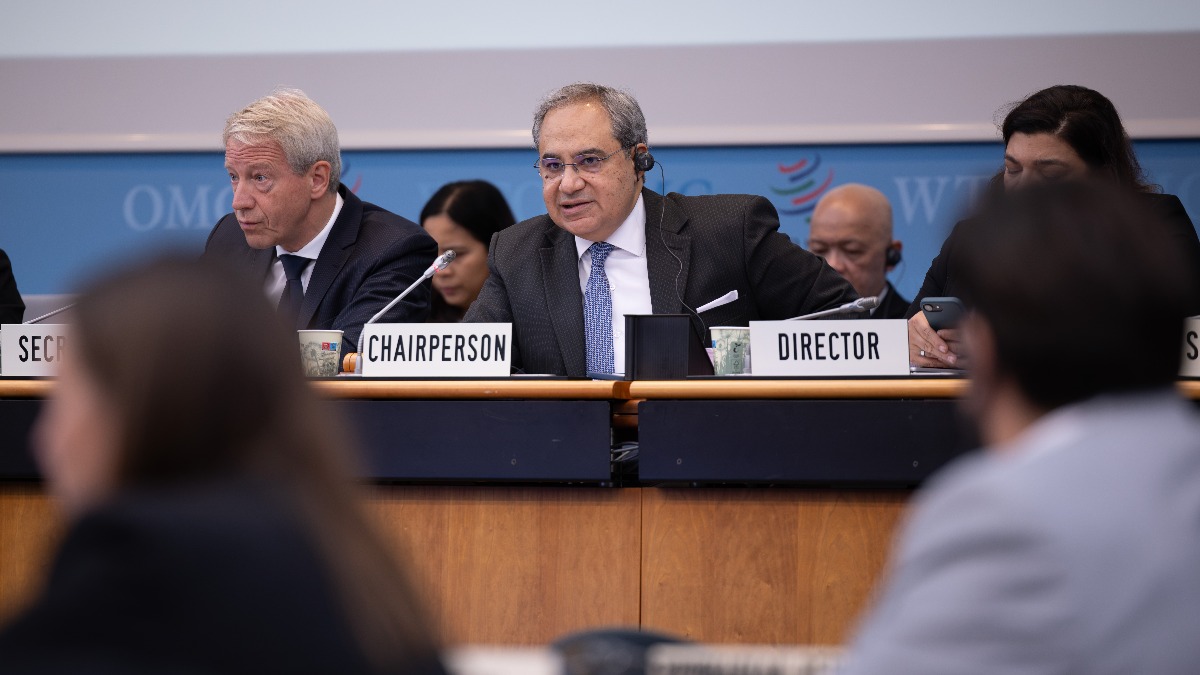
Under the review of national implementing legislation for intellectual property rights, the Council successfully concluded Samoa's review. Members thanked Samoa for its timely answers and collaboration during the review. The Chair Ambassador Alaa Hegazy (Egypt), also announced that Vanuatu has submitted the necessary documents, enabling the Council to launch the process for the review of Vanuatu's implementing legislation.
IP, COVID-19 and pandemic preparedness
The Council continued discussions on IP, COVID-19 and pandemic preparedness, including the 12th Ministerial (MC12) Decision on the TRIPS Agreement and COVID-19 vaccines. A number of members said that responses to future pandemics should build on lessons learned during COVID-19. Some said that the MC12 TRIPS Decision, while an important multilateral effort, was limited in scope and adopted late. They pointed out practical issues and stumbling blocks that led to bottlenecks, with one member noting that limited use had been made since enactment due to bureaucratic burdens.
Other members emphasized the role of robust IP protection in enabling the rapid development of vaccines and treatments and that such protections were needed to ensure companies were willing to make investments in new treatments. These members saw value in examining practical examples of voluntary licensing, partnerships and other cooperative mechanisms and giving private businesses a voice.
TRIPS and biodiversity
Members continued their exchanges on the relationship between the TRIPS Agreement and the Convention on Biological Diversity (CBD), the protection of traditional knowledge and folklore, and the review of TRIPS Article 27.3(b), which deals with patentability of plant and animal inventions, and plant varieties.
Several delegations referred to the 2024 World Intellectual Property Organization (WIPO) Treaty on Intellectual Property, Genetic Resources and Associated Traditional Knowledge (GR/TK), which will establish a mandatory patent disclosure requirement once it enters into force, as a recent and relevant development. Views continued to differ on whether, and how, this development should inform work in the TRIPS Council.
Some members supported continued engagement on the TRIPS-CBD relationship and broader "triplets' issues" (involving biodiversity, patenting and traditional knowledge) within the Council and considered that the WIPO Treaty complements, rather than replaces, this work. Several members said that WIPO was the correct place to work on the issue, and that there was a risk of confusion and duplication by continuing work at the WTO in parallel.
Annual reviews and reports
The Council conducted its Annual Review of the Special Compulsory Licensing System. The Council noted recent ratifications of the Protocol Amending the TRIPS Agreement, including the upcoming deposit of its acceptance by Vanuatu and adopted its report on the annual review of this system.
The Council also undertook its annual review of developed country members' reports on their implementation of Article 66.2. Article 66.2 requires developed countries to provide incentives for their businesses and institutions to promote technology transfer to LDCs. The Secretariat presented a new function integrated into the e-TRIPS portal that allows the search and filtering of information contained in the detailed reports developed members have submitted outlining their national programmes on technology transfer.
Programmes highlighted in the meeting included knowledge-sharing platforms, IP workshops for LDCs providing practical training, and included a wide range of specific programmes ranging from cybersecurity to digitizing health records to fish farming aquaculture help.
The Council also reviewed reports on capacity building for developing countries submitted by developed members, as well as by the WHO, WIPO, UNCTAD and the Gulf Cooperation Council (GCC). Several representatives provided updates to the Council on their technical assistance provided since 2025. The Secretariat also provided an overview of its TRIPS Case Law Digest, a project to collect domestic legal decisions that highlight the implementation of the TRIPS Agreement.
Several other reviews were considered and discussed between members, including the Review of the Implementation of the TRIPS Agreement under Article 71.1; and the Review of the Application of the Provisions of the Section on Geographical Indications under Article 24.2.
Side events, other matters
Bangladesh, Brazil, Egypt and India hosted a side event on 11 November focused on TRIPS implementation and public health, which was also reported on in the Council. Panel discussions were held on the evolving landscape of intellectual property protection, trade and pharmaceuticals since the 2001 Doha Declaration on TRIPS and Public Health, including competition issues.
The IP and Innovation Group hosted a side event on "IP and MSMEs" (micro-, small-, and medium enterprises) and how they leverage IP to grow their businesses sustainably, featuring two MSME success stories. In discussions in the TRIPS Council related to IP office support to MSMEs, several countries pointed out how MSMEs made up the bulk of their companies, and the importance of helping them better understand and use IPRs as part of their business strategy.
One delegation informed the Council about discussions relating to the International Legally Binding Instrument on Plastics Pollution, including in the marine environment in other WTO committees, noting the relevance of IP matters to the issue.
Next steps
The next regular meetings of the Council for TRIPS are scheduled for 11-12 March, 23-24 June and 12-13 October 2027.
Share
Problems viewing this page? If so, please contact [email protected] giving details of the operating system and web browser you are using.