Why did the system need to be locally adapted?
Renewable energy certification is not just a technology issue. It also depends on trust, regulations, institutions and market confidence.
Viet Nam’s electricity sector has strong public-sector involvement. So, for the system to work, it needed credible local institutions, verified power producers, clear rules and confidence from buyers.
That is why 60Hertz worked with PV Power REC, a Vietnamese state-owned institution, as well as local and international actors. Partners included the Global Green Growth Institute, Lloyd’s Register, Deloitte and other third-party verifiers, whose role was to help confirm that the system was reliable and aligned with global standards.
What did the pilot achieve?
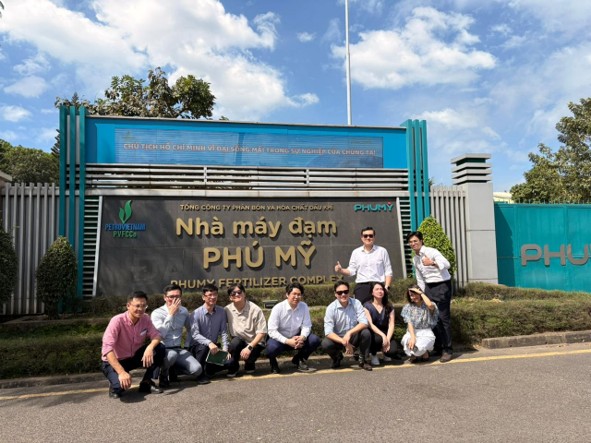
The pilot connected five Vietnamese state-owned renewable energy facilities to the system, with a combined capacity of about 5 MW. After on-site checks and verification, the system issued 1,500 MWh of Energy Attribute Certificates (EACs).[2]
The certificates were then sold through real transactions with two global companies operating in Viet Nam. This showed that the system could work from start to finish, in other words renewable energy producers could issue certificates, and companies were willing to buy them.
The pilot also achieved a verified carbon reduction of 988.8 metric tonnes of carbon dioxide equivalent (tCO2e).
What made the system technically strong?
The project developed a software prototype that can track renewable electricity generation on an hourly basis. It also supports smaller renewable energy facilities, including those generating less than 100 kW.
The project also built key operating foundations, including global standards (ISO) certification, technology escrow, grid connection protocols, operating rules and third-party conformity assessments. A domestic patent application was also filed.
How did the project prove there was real market demand?
The team studied how companies buy EACs and tested actual transactions with different types of buyers.
This helped prove that there was demand on both sides: renewable energy producers were willing to issue certificates, and companies were willing to purchase them.
Participating companies are now preparing environmental, social and governance reports that include verified EAC purchases. Their Carbon Disclosure Project[3] submissions in the second half of 2025 also helped confirm market readiness before wider scale-up.
What are some of the lessons learned?
First, EAC markets need trust. In government-led electricity markets, public institutions and private companies must work together from the beginning.
Second, local context matters. A certificate system that works in one economy cannot simply be copied into another. Rules, institutions, pricing practices, grid structures and buyer expectations all shape whether a market will function.
Third, the implementing partner is critical. Successful EAC market formation requires more than technical software capacity. It requires technical knowledge, market understanding, corporate buyer insight and the ability to manage local administrative realities. And that’s why 60Hertz's combination of technical capability and market knowledge was decisive in turning a technical project into a functioning market.
More information: www.koica.go.kr / 60Hertz website: https://60hz.io/en
Contributed by the Republic of Korea.
[1] RE100 is the world's leading corporate renewables initiative bringing together businesses driving the switch to renewable electricity.
[2] Energy Attribute Certificates are digital, market-based instruments that serve as proof of origin for one megawatt-hour (MWh) of renewable electricity added to a shared power grid.
[3] The Carbon Disclosure Project is a global non-profit organization that operates one of the world's leading environmental disclosure systems. Companies, governments and regions use it to report information on environmental impacts and risks.