
THE WTO IN BRIEF: PART 2
The organization
The WTO’s overriding objective is to help trade flow smoothly, freely, fairly and predictably.
- Administering trade agreements
- Acting as a forum for trade negotiations
- Settling trade disputes
- Reviewing national trade policies
- Assisting developing countries in trade policy issues, through technical assistance and training programmes
- Cooperating with other international organizations
Structure
The WTO has about 160 members, accounting for about 95% of world trade. Around 25 others are negotiating membership.
Decisions are made by the entire membership. This is typically by consensus. A majority vote is also possible but it has never been used in the WTO, and was extremely rare under the WTO’s predecessor, GATT. The WTO’s agreements have been ratified in all members’ parliaments.
The WTO’s top level decision-making body is the Ministerial Conference which meets at least once every two years.
Below this is the General Council (normally ambassadors and heads of delegation in Geneva, but sometimes officials sent from members’ capitals) which meets several times a year in the Geneva headquarters. The General Council also meets as the Trade Policy Review Body and the Dispute Settlement Body.
At the next level, the Goods Council, Services Council and Intellectual Property (TRIPS) Council report to the General Council.
Numerous specialized committees, working groups and working parties deal with the individual agreements and other areas such as the environment, development, membership applications and regional trade agreements.
See organization chart.
(To return to this page, click on your browser’s“back” button.)
back to top
Secretariat
The
WTO Secretariat, based in Geneva, has around 640 staff and is headed
by a director-general. Its annual budget is roughly 197 million Swiss
francs. It does not have branch offices outside Geneva.
Since decisions are taken by the members themselves, the Secretariat
does not have the decision-making role that other inter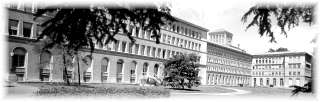 national bureaucracies are given.
The Secretariat’s main duties are to supply technical support for the various councils and committees and the ministerial conferences, to provide technical assistance for developing countries, to analyze world trade, and to explain WTO affairs to the public and media.
The Secretariat also provides some forms of legal assistance in the dispute settlement process and advises governments wishing to become members of the WTO.
Find
out more about the
organization.
(To return to this page, click on your browser’s
“back” button.)