agriculture
Meeting highlights importance of market transparency for stable and predictable food trade
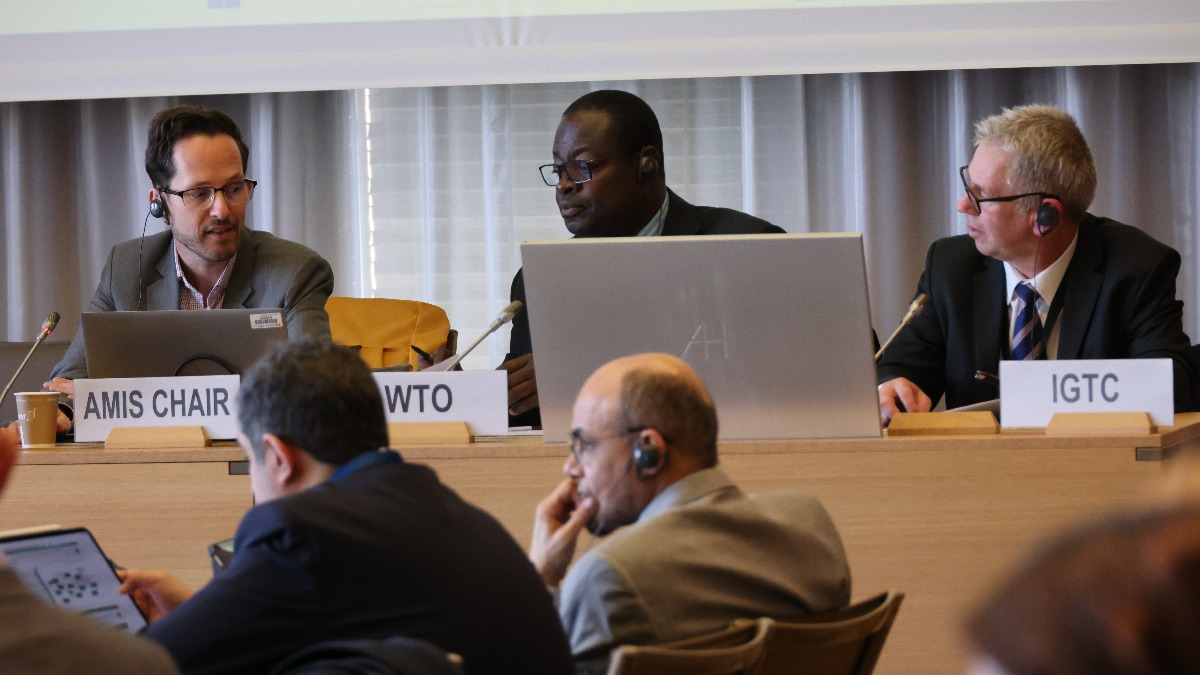

Despite trade tensions, global agricultural commodity markets are well supplied in 2025 due to a confluence of factors, including favourable weather conditions in many producing regions, participants heard.
Across two days of meetings, participants heard from a variety of organizations, including the Food and Agriculture Organization of the United Nations (FAO), the International Food Policy Research Institute (IFPRI), United Nations Trade and Development (UNCTAD), the World Bank, and the World Food Programme (WFP), as well as from AMIS countries.
AMIS includes G20 members along with Spain and eight other major agricultural exporting and importing countries, representing around 80-90% of global production, consumption and trade volumes of crops such as wheat, maize, rice and soybeans.
Edwini Kessie, Director of the WTO's Agriculture and Commodities Division, opened the meeting by underscoring the important role that AMIS plays.
"Today, the global policy landscape for food and agriculture is going through a period of unusually pronounced turbulence and volatility," he told participants.
"It is precisely at times like this that the work of AMIS is so very valuable, both to policy makers and market actors," he continued.
Mr Kessie noted that the WTO supports AMIS through its regular policy monitoring, working closely with the Organisation for Economic Cooperation and Development (OECD) and other AMIS Secretariat members.
"The WTO strongly supports the work of AMIS in strengthening transparency on global agriculture commodity markets, with a view to improving food security," he concluded.
The Chair of AMIS, Donald Boucher (Canada), told the meeting that the platform's work was now well recognized by governments and market actors.
"As AMIS was created during the food price hikes of 2007-08, we understand that the area's most at risk of food insecurity feel the effects of price volatility the most. Therefore, AMIS's role as an inter-agency platform to facilitate multilateral collaboration and market transparency, while supporting informed policy development, is crucial for global food security efforts," Mr Boucher said.
More information about AMIS is available here.
Share
Problems viewing this page? If so, please contact [email protected] giving details of the operating system and web browser you are using.