- home
- trade topics
- building trade capacity
- aid for trade
- Cambodia: Cambodia's journey to new export opportunities
Cambodia
Cambodia's journey to new export opportunities
Mr Chhun Hy Heng is Deputy Director of the Department of Plant Protection, Sanitary and Phytosanitary, of Cambodia's General Directorate of Agriculture. He talks about how meeting food safety standards has helped peppercorn exports reach new markets.
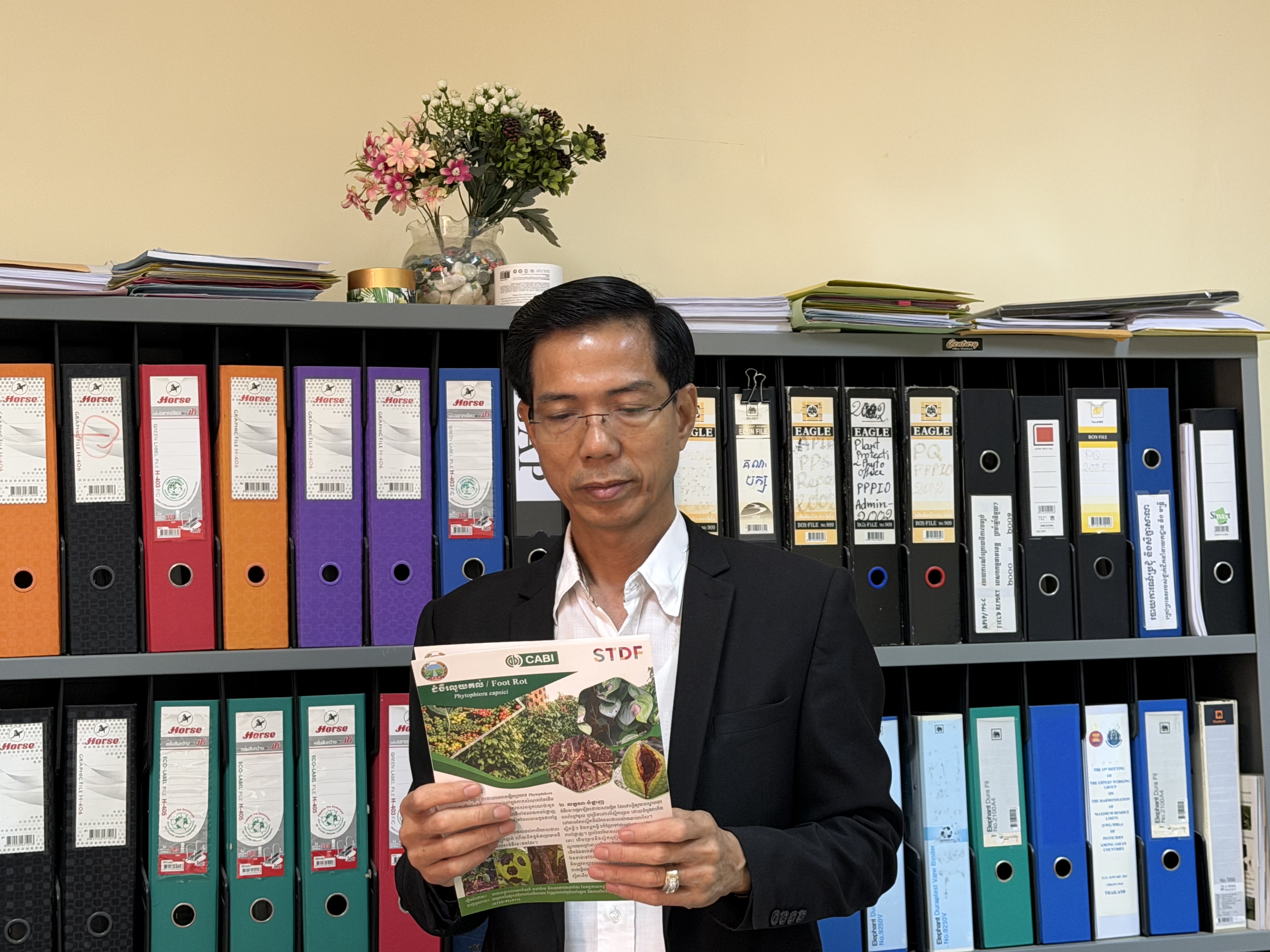
Mr Chhun Hy Heng is Deputy Director of the Department of Plant Protection, Sanitary and Phytosanitary, of Cambodia's General Directorate of Agriculture
How important is peppercorn production for Cambodia?
Peppercorn farming provides an important source of income for thousands of smallholder families in Cambodia. But transforming Cambodia's potential in the peppercorn value chain into sustained export growth does not come without its challenges.
What are some of the challenges faced by producers?
Farmers and local businesses must navigate complex supply chains and meet food safety requirements, often without any practical guidance or coordinated support. As a result, maintaining consistent quality and traceability has been difficult, limiting access to higher-value markets and the opportunity to take advantage of the economic benefits that they can bring.
How have these challenges been addressed?
Regional partnerships were established with Lao PDR and Viet Nam, funded by the Standards and Trade Development Facility (STDF) and implemented by CAB International. These partnerships brought government authorities, private sector partners and farmer groups together, to strengthen food safety and improve market access across the pepper value chain.
What novel approaches were introduced?
A practical code of practice based on Codex food safety standards was developed and adapted to local conditions. Using simple and practical guidance materials, it helped farmers apply Cambodia Good Agricultural Practices and Good Hygiene Practices in their daily work, from cultivation and pesticide use to harvesting, handling, packaging, storage and transportation.
A grassroots public-private partnership (G-PPP) model was also introduced, adapted from low-cost, locally based systems of quality assurance, known as Participatory Guarantee Systems, enabling farmers, buyers and authorities to work more closely together. Through peer learning, group-based monitoring and regular exchanges, farmers improved production practices while building trust with buyers.
What effect did the project have on South-South cooperation?
It was extremely positive, as South-South cooperation with Viet Nam allowed us to benefit from established experience in peppercorn production and export, helping to align approaches and strengthen results across the region.
What were some of the results?
Interventions on the ground quickly translated into real results. Safer production practices and stronger links to buyers meant that new markets could be reached. In April 2024, a major milestone was achieved with the first-ever export of 30 tons of black peppercorns to China, while also expanding exports to the European Union. In the first quarter of 2024 alone, pepper exports reached nearly US$ 10 million.
And what kind of impact has this had on farmers?
The impact for farmers has been notable: these changes meant more stable incomes and greater confidence in their production. Improved practices led to higher yields and better prices, with incomes rising by around 30 per cent for farmers in the project area. Producing safer, higher-quality pepper also helped build trust with buyers, opening up more reliable market opportunities.
Farmers are now better prepared to participate in the modern agricultural communities being promoted by the Ministry of Agriculture, Forestry and Fisheries. Through training, group-based learning and closer collaboration across the value chain, farmers have gained practical experience that can support a wider adoption of safer and more market-oriented production practices. This is particularly important for Cambodian peppercorns, where export markets such as China, Japan, Republic of Korea, Viet Nam and the European Union, including Germany and France, require consistent quality, safety and reliability of supply.
What about the impact beyond farmers?
Beyond these immediate results, the project has laid the groundwork for wider change. The code of practice and the G-PPP model have demonstrated strong potential for scale-up, with strategies developed for their wider roll-out. Improved practices have already spread beyond direct beneficiaries, through informal knowledge sharing among farmers.
The approach is also being taken forward through broader agricultural initiatives. The EU-German Cambodia Partnership for Sustainable Agriculture and Food Systems, implemented by the German federal development agency, GIZ, is using the STDF-developed code of practice to strengthen food safety, climate-resilient farming practices and competitiveness in Cambodia’s pepper value chain. There is also growing interest in applying the approach to other value chains, highlighting its potential as a practical model to strengthen food safety and expand market access more broadly.
What are some of the lessons learned?
Some key takeaways from the project:
- Making international food safety standards practical and accessible is key. Translating food safety requirements into simple, locally adapted guidance helped farmers adopt improved practices.
- Partnerships are essential. Close collaboration between government agencies, the private sector and farmer groups accelerated implementation and strengthened local ownership.
- Flexibility supports resilience. The project adapted to challenges, including disruptions caused by the COVID-19 pandemic, while maintaining momentum.
- Regional cooperation adds value. South-South cooperation with Viet Nam and Lao PDR facilitated knowledge sharing and faster adoption of best practices.
"Through this project, farmers gained new knowledge to improve the quality and safety of their peppercorns, so they could sell and earn more. Companies were able to source higher-quality peppercorns and export to new markets like China. This led to bigger profits for businesses, higher government revenues and foreign exchange earnings. Overall, the whole country benefits." Dr Ker Monthivuth, Director, Department of Plant Protection, Sanitary and Phytosanitary, General Directorate of Agriculture, Cambodia.