What was the solution?
China provided grant assistance to build three corn flour processing plants in Zambia, implementing outcomes from the Beijing Summit of the Forum on China-Africa Cooperation. The project was funded by Chinese government grants, organized and implemented by China’s Ministry of Commerce, and designed to support Zambia’s agricultural modernization.
What made this project different from a standard infrastructure investment?
It did not focus only on building factories. It connected the whole corn industry value chain — from cultivation and production to processing and storage. One of the plants was located at the China-aid Agricultural Technology Demonstration Center, built in 2011, which had already supported improvements in corn production capacity.
When were the plants completed?
The three plants were completed and handed over in 2022. China also provided long-term technical support and training to help local workers develop the capacity to operate and maintain the facilities.
What has the project delivered for jobs and skills?
The project has trained more than 700 local workers and created around 500 jobs. That means the investment is not only improving agricultural processing; it is also helping local people gain skills, earn income and participate in a more modern agro-processing sector.
What difference has it made to production?
The plants can process more than 500 tons of corn per day. This increases Zambia’s capacity to turn raw corn into higher-value corn flour, reduces processing and transport costs, and strengthens the overall agricultural industry chain.
How does this help consumers?
By expanding local processing capacity and reducing costs, the project helps stabilize corn flour prices. That matters because corn flour is an essential food product. More efficient processing can help improve food affordability and reduce pressure on households.
How does this support trade?
Stronger processing capacity improves product quality, value addition and competitiveness. This helps Zambia move beyond raw agricultural production toward higher-value agro-processing, making its corn products more competitive in domestic and export markets.
What does the project show about agricultural modernization?
It shows that modern agriculture is not only about growing more crops. It is about building the systems around production: processing, storage, logistics, technical skills and market access. When the whole chain is strengthened, agriculture can support livelihoods, industry and trade at the same time.
What do beneficiaries say?
Robster Mwanza, who lives in the Monze District in Zambia, said: "I used to do odd jobs nearby, with a fluctuating income. Now, I work in a modern corn flour processing plant, my family’s monthly income has doubled, and I have bought decent furniture for my family."
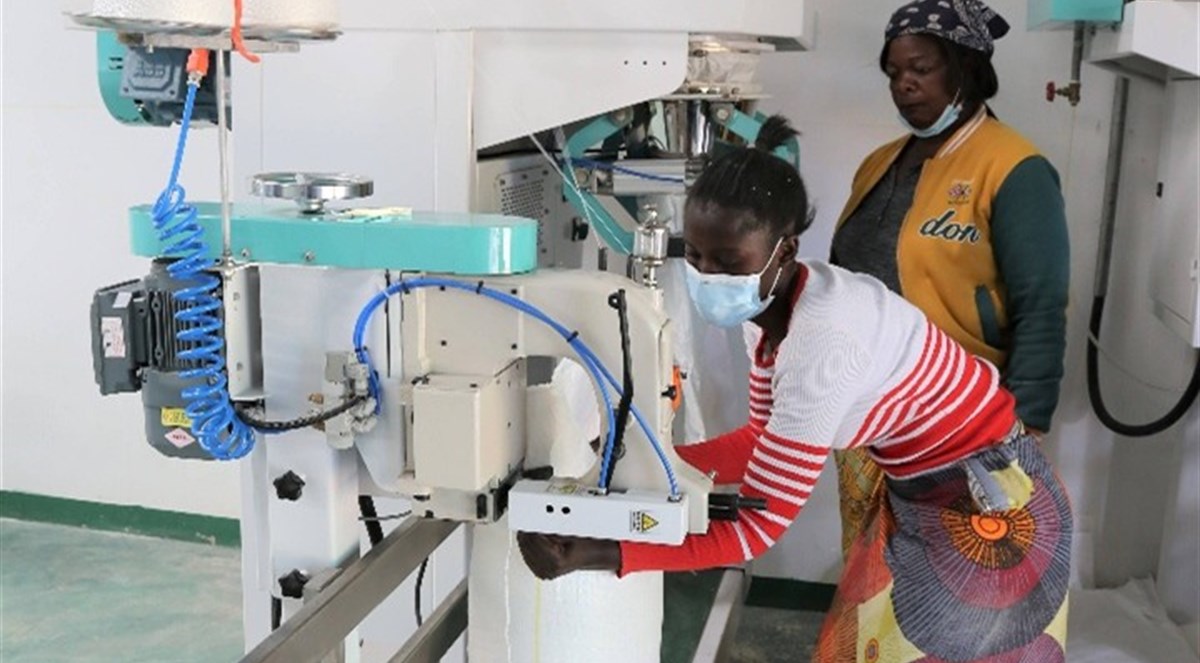
Contributed by the Permanent Mission of China to the WTO.