AGREEMENT ON GOVERNMENT PROCUREMENT (GPA)
Celebrating 10 years of the revised Government Procurement Agreement: GPA 2012
In 2024, the WTO celebrated the 10th anniversary of the revised WTO Agreement on Government Procurement (GPA 2012), which entered into force on 6 April 2014. To mark this dual anniversary, the WTO Secretariat has created this dedicated webpage.

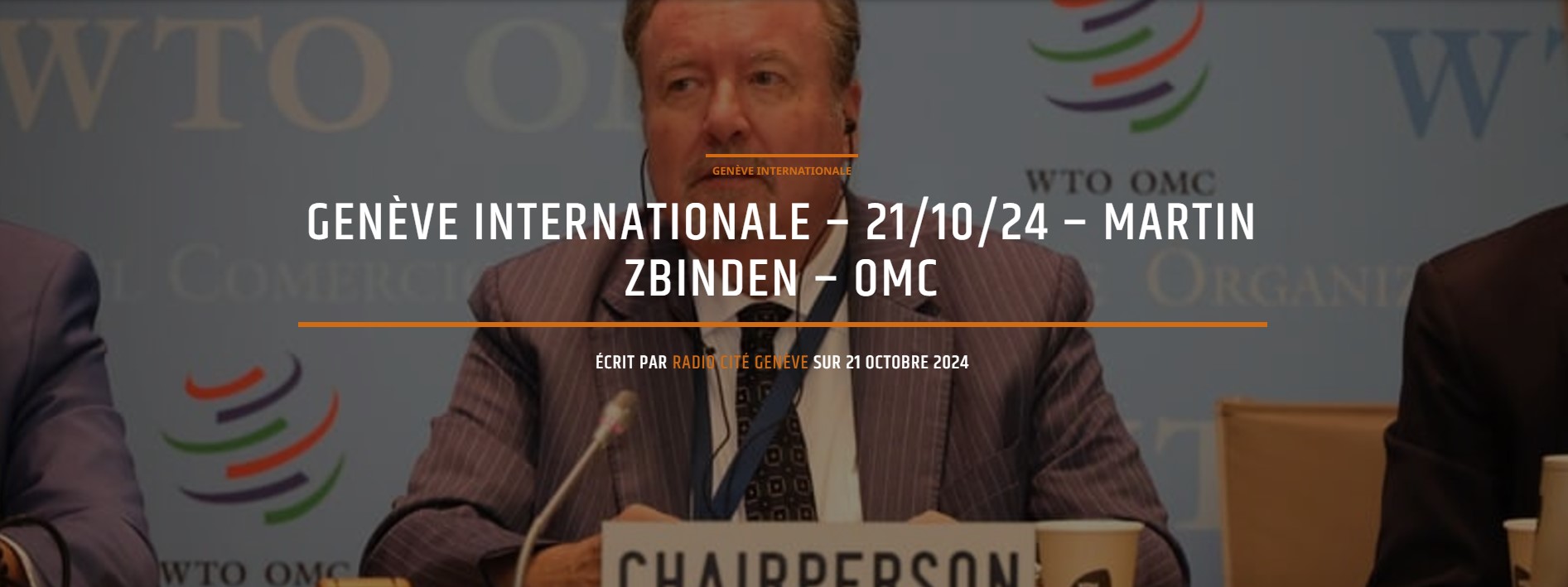
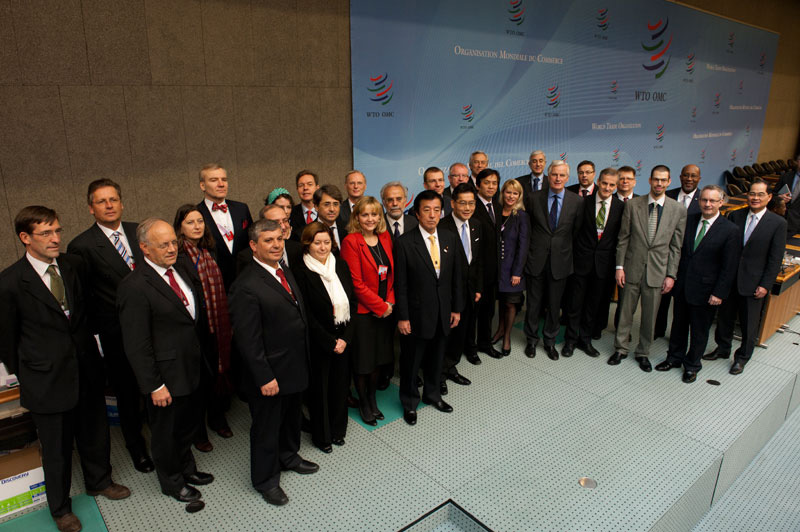
On 12 December 2011, the Committee on Government Procurement held a ministerial meeting during the WTO's Eighth Ministerial Conference in Geneva.
Improvements brought about by GPA 2012
The GPA 1994, which had been in force since the beginning of 1996, was renegotiated within the WTO Committee on Government Procurement from 1997. The negotiations were concluded in December 2011 and the results were adopted in March 2012.
The renegotiation involved both the modernization of the text of the Agreement and a significant expansion of the market access commitments.
Improved text
The improvements to the text of the previous version of the GPA include:
- a complete revision of the provisions of the Agreement, with a view to making them more streamlined, easier to understand and user-friendly;
- updating the Agreement to take into account new developments in government procurement practices, notably the use of electronic tools;
- additional flexibilities for procurement authorities — for example, shorter notice periods when electronic tools are used;
- more explicit recognition of the right of procuring entities to promote environmental values and sustainability;
- a new requirement for participating governments to avoid conflicts of interest and prevent corrupt practices in their procurement activities; and
- revised and improved transitional measures for developing economies that accede to the Agreement.
Expansion of market access
The additional market access commitments inscribed into the GPA 2012 have been estimated to be worth US$ 80-100 billion annually. These include:
- the addition of more than 500 central, sub-central and other government entities covered by the Agreement;
- improvements in the coverage of goods;
- a reduction in the thresholds of some GPA parties for procurement activities covered by the Agreement;
- coverage of new service sectors by almost all of the GPA parties, especially in the area of telecoms;
- full coverage of construction services by all GPA parties;
- coverage of build-operate-transfer contracts, public works concessions or other forms of public private partnerships by three GPA parties; and
- elimination by several GPA parties of miscellaneous restrictions on market access.

Evolution of the GPA
1976
Start of negotiations on government procurement during the GATT Tokyo Round.
1979
The GATT Tokyo Round Agreement on Government Procurement is adopted (Tokyo Round Code, GPA 1979).
1981
The GPA 1979 enters into force.
Parties at the time of entry into force (10): Canada; the European Economic Community (nine member states; Belgium; Denmark; France; the Federal Republic of Germany; Ireland; Italy; Luxembourg; the Netherlands; and the United Kingdom); Finland; Japan; Norway; Singapore; Sweden; Switzerland; the United Kingdom (in respect of certain territories for which it had international responsibility); and the United States.
1986
Protocol amending the GPA 1979 is adopted (GPA 1986).
1988
The GPA 1986 enters into force.
Parties at the time of entry into force (12): Austria; Canada; the European Economic Community (ten member states: Belgium; Denmark; France; the Federal Republic of Germany; Greece; Ireland; Italy; Luxembourg; the Netherlands; and the United Kingdom); Finland; Israel; Japan; Norway; Singapore; Sweden; Switzerland; the United Kingdom (in respect of Hong Kong); and the United States.
1994
The WTO Agreement on Government Procurement is adopted (GPA 1994).
1996
The GPA 1994 enters into force.
Parties at the time of entry into force (eight): Canada; the European Communities (15 member states: Austria; Belgium; Denmark; Finland; France; Germany; Greece; Ireland; Italy; Luxembourg; the Netherlands; Portugal; Spain; Sweden; and the United Kingdom); Israel; Japan; Norway; Singapore; Switzerland; and the United States.
1997
The coexistence of the GPA 1986 and the GPA 1994 ends.
2012
The Protocol amending the GPA 1994 is adopted (GPA 2012).
2014
The GPA 2012 enters into force.
Parties at the time of entry into force (10): Canada; the European Union (28 member states: Austria; Belgium; Bulgaria; Croatia; Cyprus; Czech Republic; Denmark; Estonia; Finland; France; Germany; Greece; Hungary; Ireland; Italy; Latvia; Lithuania; Luxembourg; Malta; the Netherlands; Poland; Portugal; Romania; Slovak Republic; Slovenia; Spain; Sweden; and the United Kingdom); Hong Kong, China; Iceland; Israel; Liechtenstein; Norway; Singapore; Chinese Taipei; and the United States.
2021
The GPA 2012 replaces the GPA 1994; the co-existence of the GPA 1994 and the GPA 2012 ends.
Share

GPA Knowledge Series

Previous legal texts
- More information on the WTO and government procurement
Problems viewing this page? If so, please contact [email protected] giving details of the operating system and web browser you are using.